Friday, July 6, 2018

Postcard from Portugal - postmarked 25 June 2018


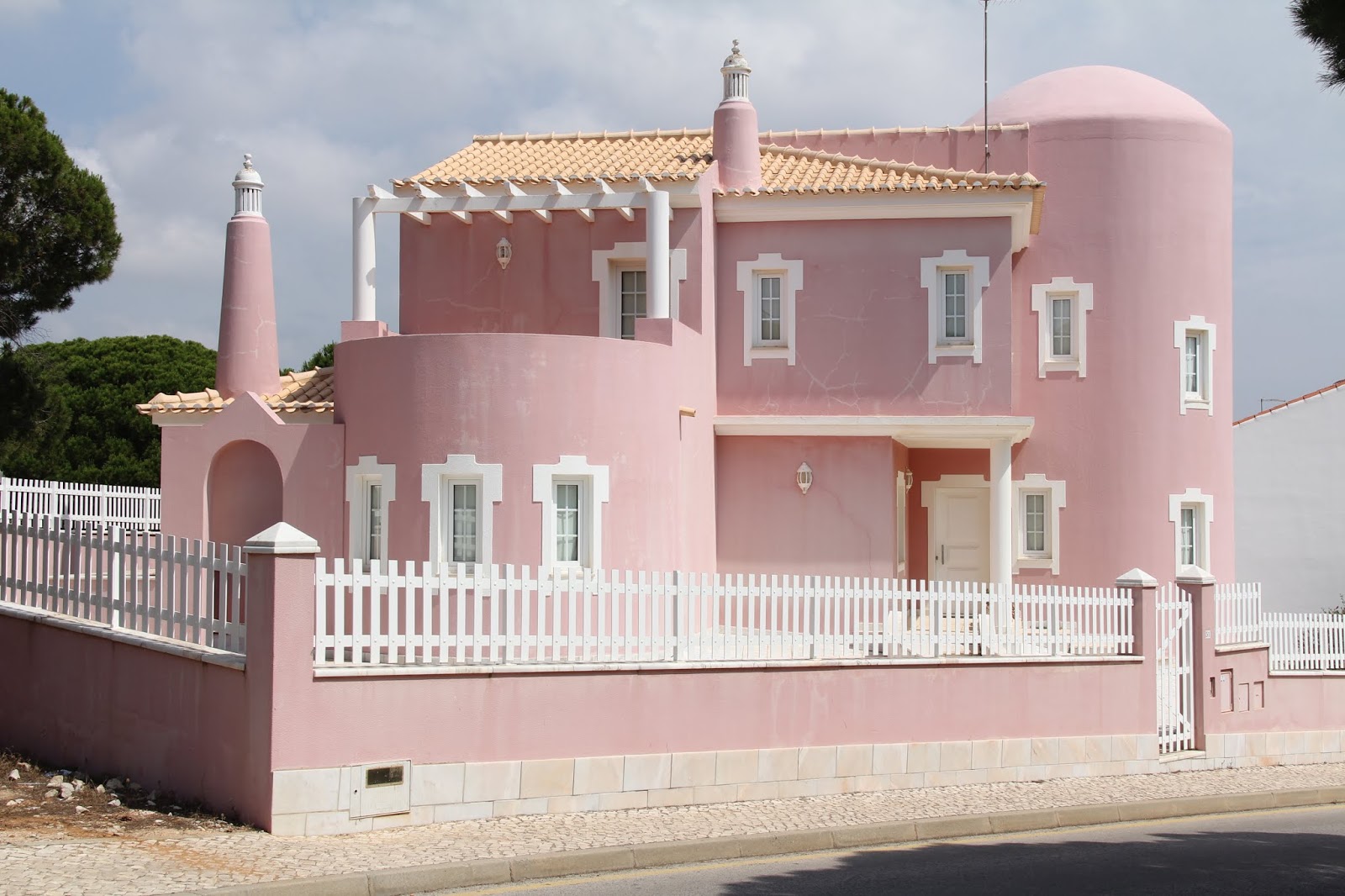
One morning last week I got out of bed and went for a walk on the beach. This, in the town of Porto Covo. It is a quaint, if not beautiful, village on the Atlantic Ocean, an hour's drive south of Lisbon. Like all towns sprinkled around southern Portugal's Atlantic coast, its houses are all whitewashed with either white paint or amazing, muted hues of turquoise, mustard, salmon and so on. I am reminded of a box of crayons that we had as kids. Can you think back to your own crayons and picture these houses? There's no mistaking that I am no longer in Canada (although I remember seeing photos of Newfoundland fishing villages similarly colourful).

If this weren't enough, the streets of the entire town -- and as I later learned, of all Portuguese cities -- are constructed of coarse chunks of black stone, each uniquely shaped, roughly cubic, the size of apples... they look to me like volcanic lava after having cooled down and solidified. Each of the thousands or perhaps millions of individual rocks must be placed one by one on a bed of sand with a space between on all sides. Then, later, sand is spread everywhere to fill in the spaces and voilà, no heavy, expensive equipment needed, just a lot of manual labour, and a road is born. I guess the system works in a country with high unemployment. The progress is slow but no potholes to be seen. On the other hand the sidewalks are made from glossy marble-like, white stones chips which are also placed manually in a random array. They appear to be cemented into place. In both cases, all the streets and sidewalks are uneven, easy to trip on, or stub a toe, even twist an ankle in a crack, with the one upside of them being beautiful, a highway of mosaic object d'art. Speaking of which, in a country with high umemployment, the artistic creativity of the Portuguese is heavily fueled by being unconstrained by gainful employment. As the streets are laid out in random fashion, not Cartesian at all as we are accustomed to in Canada, surely due to the roads having been created long before cars first appeared, many, if not most intersections are at odd angles, resulting in spits of land, too small for a house, but just so for either a beer stand, café, or a sculpture, sometimes life-size, other times humongous. I have come to believe that, either way, it is either an unlicensed commercial activity or an unsanctioned sculpture that simply one day appears. In one case we came upon a series of plush sofas on a wide sidewalk which looked soft and comfortable but were in fact crafted from stone. Comfortable to sit on but far from soft as they appeared to be.


At the risk of repeating myself, I am again surprised by the artistic creativity of the Portuguese. Aside from the interesting graffiti on display everywhere there is a fence or wall, in many cases entire houses have become the canvas for an artist to express him or herself. Almost always brilliant (I only once spied a large wall painted in black and white) with bright colours employed and remarkable definition rendered, I became nearly addicted to photographing the art from an interesting angle or with some contrasting distraction, people walking in front, or a street sign in the foreground providing a clue as to where in the world I was at the time.


As I was saying, I went for a walk on the beach one morning. Five days later I stopped walking and checked the app on my phone: 125 km clocked! Hard to believe isn't it? Harder still was carrying my 30-lb backpack the entire way. While it is true that a small part of the hike was indeed on the beach, the greater part is spent two or three hundred feet above the Atlantic ocean along the cliffs and dunes that parallel the shoreline all the way to Sagres, the town that is at the extreme southwest corner of Portugal, indeed of all of Europe! Each day is spent walking south, and my being overwhelmed by the neverending and spectacular views of the ocean and rocky shoreline ahead seen from high up. I have to tell you that there is very little in life more rewarding than getting out of bed in the morning, having a delicious calorie-dense breakfast and then going for a 25-km walk! Especially when the views are similar to the one you see on this postcard. There is a certain freedom to traveling from town to town without the silly requirement of using a car, or taking a train. A bonus: Ten or twenty secluded, pristine beaches are spotted below each day, one of which we choose to hike down to for a swim and a rest on a daily basis. These beaches are flanked by rocky barriers at either end making our approach down the cliffside somewhat challenging and ultimately the only way to access the sand and surf. Normally, we own the beach as they are all difficult to access, plus there are no roads cut through the brush and cactus to our clifftop hiking trail. 

Although the waters along the famous Algarve on Portugal's south coast are quite warm and enjoyable, here the sea is very cold, any swim is short, very short for me at least. Picture me running in before I could change my mind, and 30 seconds later running out before my lips turn blue and my fingers numb! Fortunately the sun then warms me up and dries both me and my hiking shorts soon enough. We walk for five to six hours a day, plus time for breaks, lunch, photos and a swim. And finally stroll into the next seaside town to discover its cafés, architecture and art. Each village has its character, but being beach towns they all share the convention of concentrating its commerce on one or two streets for the tourists to congregate and buy tchotchkas, sip on sangrias and ultimately spend the entire evening on a terrasse for dinner and drinks. The biggest stress of the day is choosing what to eat: grilled sardines, octopus or squid, or maybe a local delicacy of seafood catalana, basically a paëlla without the rice getting in the way. The entire month of June is sardines month in Portugal, don't ask why, and grilling them on a charcoal BBQ is ubiquitous. You may be surprised to learn that a great many of the restaurants do their grilling outside beside or behind the terrasse where we sit, even sometimes on a tiny hibachi. 

One of the pleasures of hiking the entire 125-km rota vincentina (the fisherman's walk) is that the seaside villages which dot the route only see Portuguese tourists (with a handful of Canadian exceptions). The foreigners flock to the Algarve where they take over those villages which have by now lost their original character. The Algarve experience really deserves its own postcard so stay tuned. In contrast, I imagine that these smaller villages that hosted us during the late afternoons and evenings along our hike have changed very little over the decades. Small restaurants and cafés adorn the main street and it seems that somebody's mama is cooking up a storm in each of their tiny kitchens. No need for five-star chefs here! Now, dining in a Portuguese restaurant back in Montreal will always bring me back to these enchanted evenings.

Here's hoping all your evenings are enchanted, too!

Barry from Portugal

Thursday, March 15, 2018

Postcard from St-Moritz, Switzerland - postmarked 11 March 2018

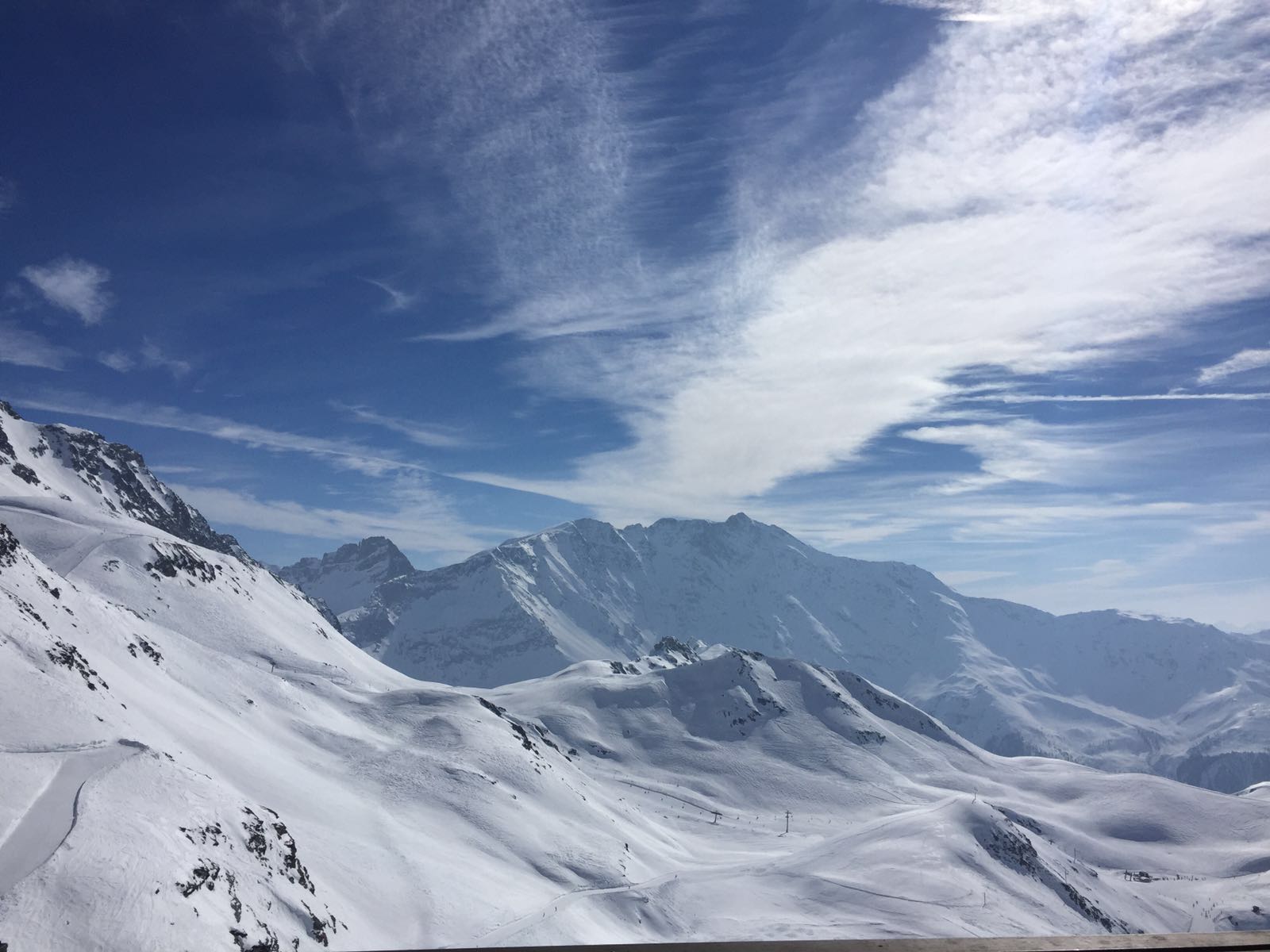
There are precious few experiences more magical or more mystical, than starting my morning at the top of the world, above the scattered wispy clouds, the cold air tickling at my nostrils and the sun brilliant against the rich blue sky straining to warm my face, before skiing back down to reality, 2,000 metres below.
But, let's rewind the tape a bit as we must first get to the top of the world, which requires rides up a series of massive cable cars sprinkled with a dose of unabashed anticipation, if not outright excitement.
The cable cars connecting the ancient storied Swiss village of St-Moritz to its majestic Piz Nair, the highest peak far above, are huge, each holding 120 skiers and snowboarders. I have heard of even larger ones that have two floors, yes, a double-decker, but have yet to see this with my own eyes. These literally whisk us upwards at high speeds, paralleling the slopes below, where we can easily see the early morning skiers shushing down on piste beneath us. Even when speaking English everybody here says 'on piste' and 'off piste,' a touch of franglais (or is it frenglish?) that we are accustomed to at home.
I have come to St-Moritz for a week of off piste skiing. All that is required are the technical skills for skiing far from the tame, groomed trails in the deeper, fresh, untracked powder; an experienced guide to keep us from skiing straight off a hidden cliff or into a field of rocks; and finally an individual radio beacon strapped to my torso and a backpack containing a fold-up shovel and an extensible rod for prodding through the packed snow in the unlikely -- yet possible -- event of a life-and-death search to locate an unfortunate fellow skier buried below thanks to a freak avalanche occurring right here right now. Our leader, an affable, tall, heavily accented Swiss Italian named Giacomo, has been guiding for six seasons here and has yet to ever rush to the aid of anybody caught in avalanche. One of his skills is knowing the areas to avoid where an avalanche is likely to occur, due to its orientation to the sun, the quality and quantity of snow that has recently fallen, the pitch of the slope, the changing temperatures and other factors.
Reaching the summit by cable cars is insufficient. The off piste slopes easily accessible from the cable car's arrival point are quickly skied on leaving the snow 'used up' by early risers. No, we late risers who have slept in until 7:30am and finally arriving at the summit by 9:30am, have to traverse in one direction or another, remaining high up on top of huge bowls and couloirs of snow below. Often, for 15 or 20 minutes of traversing of perhaps a kilometer, or, even more taxing at this elevation: climbing higher still in boots, skis slung over one shoulder, breathless, arriving, at the very top of a steep pitch with an even steeper and narrow entry point to the mountain of fresh powdery snow awaiting us below.

Depending on one's character, I can see it clearly in the concerned faces of my fellow skiers, the adrenaline rush we all feel is either painfully scary, or simply delightfully exhilarating! No need to be deposited here by helicopter, the climb was exhausting and worth it, the view from the top of the world, is, well, otherworldly.
Strange how the snowy peaks directly across the other side of the valley beckon, it feels as if I can stretch out my arm and scoop a handful of snow in my glove even though I know that gloveful of snow is 10 kms away. And so the dream starts with blue within blue skies above, faraway rugged mountains at the horizon that I caress with my mind's fingertips, rarified cold air that will sadly not luxuriously fill my lungs as at sea level. Most important the first turn that I will soon take over the small cornice, a drop of less than ten feet, into a mountain of snow below. That first turn beckons the second, and the rhythm is then set, for better or for worse for the next minute. I know that I will be breathless by then and my legs will stop responding to the music playing in my brain, that helps me keep the beat. No, I never ski with earphones, but yes, I do hear the lyrics of my favourite tunes, keeping my skis on beat or getting them back on beat when I fumble and miss a turn. When the pitch is not terrifying, nothing can stop me, my skis react instantly to every contour below my feet, I feel like a God, something like that life-size Popeye stand-up inflatable doll I had when very young, no matter how I punished it, it always landed on its feet. In these conditions I manage to impress my ski colleagues. At the top, however, when the pitch feels nearly vertical, I do my very best to ski, pretending as though the powdery expanse is not steep, as though I am still a God, and I freely admit it is very challenging, however I also relish in telling you that it is always exhilarating to ski down from so high up, in an expansive bowl of powder untracked by others, with the belief that the perfect run is always inside me... waiting to get out!

But I know you want to hear about St-Moritz, enough about skiing and its accompanying exhilaration, what about the town of St-Moritz? Is it true that it is here that the most valuable real estate in all of Switzerland is located? Yes, this is correct. It may also be true that St-Moritz is the first ski village in the world, where apparently the sport first came into existence. However the village is centuries older, with its narrow cobblestone pedestrian streets winding their way up through the heart of the central shopping area. Dotted with wine bars and famous chocolateries, more obvious are the most expensive branded stores in the world lining the sidewalks: Gucci, Louis Vuitton, Bottega Veneta, you get the idea. We know there is no upper limit to the price tags of jewellery and watches, however when I see $3,000 jerseys, $7,500 sweaters and $15,000 jackets, I understand. The bus driver that drove us back to Zurich at the end of my week told me that one day last year he was asked to go to the airport to collect the luggage for a client and transport them to the hotel. The client was the uncle of the king of Brunei and arrived, alone, in a 747, with 195 pieces of luggage in tow. Purchasing a $7,500 sweater for him is likely equivalent to my purchasing a $2 fridge magnet: neither of us is the poorer for the purchase. The few five-star hotels in and around St-Moritz have rooms that start at $2,000 per night. Breakfast not included. Royalty and the very wealthy have been coming to St-Moritz for centuries and thanks to them, the common folk (me?) can browse the most incredible fashion shops unparalleled anywhere else on the planet, try on an article of clothing that may be more expensive than a small car, and gaze at ourselves in the mirror. St-Moritz, like most Swiss villages, features a tall clock tower at the top of the town. No Swiss citizen can be excused for arriving late to an appointment as the clock towers are visible from all parts of town. On one weekend in January the world-famous horse races take place on the large frozen lake at the town's base, an event I am informed that must be added to my bucket list. Fortunately, I did witness (again) the Engadin ski marathon, a 42-km race that attracts over 40,000 Nordic skiers, which passes right through lower St-Moritz at kilometre 15. If you enjoy skate-skiing, it's a sight that will turn you green with jealousy for not having decided to participate. A ribbon of thousands of XC skiers, as far as you can see, dressed in all colours and patterns of skin-tight outfits, visible from far against the snowy white background, races by, the strain of their efforts clearly visible on each racer's face.

No strain on my face, for now my blissful week of action is behind me as I relax, finally, on my flight home.
Cheers!
Barry from Switzerland xx

Monday, March 20, 2017

Postcard from Chamonix (postmarked 10 March 2017)

This week has been an epic week, one for the record books, in particular for my personal Guinness Book of Records. I'll start at the end where all great beginnings have their roots...

The last ski run of the day started at the summit of Grands Montets, one of six distinct ski areas comprising Chamonix-Mont Blanc, accessible by first riding up a gondola from the base, then a chairlift and finally a large cable car that holds up to 50 excited skiers, each one either staring silently out the hard, plastic windows, all scratched up by thousands of ski tips having rested against them over the years, at the slopes far below, hypnotized by the expansive barren terrain, or, debating intently with his or her ski buddy about the perfect ski to use for today's conditions, or of a recent alpine experience, frequently in some foreign tongue. As we ascend it slowly becomes evident how high above sea level we are: the sky gradually becomes deeper blue, blue within blue -- I am reminded of how the astronauts get to witness how the sky becomes deeper blue, then still darker until it finally morphs into black after they blast off from earth into orbit! The cable car finally arrives at the very peak, over 3,300 metres above sea level, and we all must, unusually, trudge down over 150 metal steps in ski boots, braving the fierce, bitter wind at the peak, carrying our skis and boards, to the actual beginning of the trail, below the arrival station. Before doing so however, nearly everybody pulls out their smartphones to take pictures and selfies despite the howling wind: at this elevation, we can see over all of the nearby mountains to the faraway peaks and even over many of those to the horizon where there are still more snow-covered peaks, most of them very rugged and craggy in this section of the French Alps. Only Mont Blanc, a few kilometres away is much higher than our vantage point on this precipice, majestic against the rich blue within blue sky, usually sporting its own personal wispy, lenticular cloud, as it is at the moment, shrouding its very peak from sight. It is awesome, if not overwhelming, a sight that I will never take for granted, as so very few people ever get here to witness the panorama.


There are now two options for your pleasure: option one is skiing down the expert trail, groomed and well marked to keep skiers from getting lost on the way down. Because we are far above the tree line, there is little difference between the marked trail, which is all covered in snow and perfectly safe to ski, and off-trail which is also all covered in snow but quite risky as it may lead to gullies, cliffs and dangerous crevices. Those people turn right once they've arrived at the bottom of the long noisy flight of aluminium stairs. We choose option two by turning left and traversing over to the top of the Argentière glacier. With our guide in the lead, we know that the way is safe as long as we follow him down, more or less. The slow continual downhill advance of all glaciers does result in numerous crevices forming, sometimes as deep as 300 metres, I am informed, so following the guide is advised. Not only is the sky deep blue and the sun brilliant above us, not only is the frozen icy glacier beneath me covered by a three-metre thick layer of soft powdery snow, not only is the slope steep but not too steep, but it is also wide, so wide that I cannot see from edge to edge, it is a dream. 

I take my first turn and then my next and then I realize I can competently keep my rhythm but am entirely unconstrained as to how long or how wide my turns can be. Fluffy snow kicks up behind me, blinding anybody who foolishly chooses to follow me as I slalom down the huge expanse of freshly fallen snow, sometimes veering way left as I please and other times right, with little forethought or reason, feeling childlike as nothing else (nor anybody else) in the world matters at the moment. The fresh brisk dry air tickles my nostrils as I inhale and it fills my lungs, but my breathing soon becomes more laboured partly due to the rarefied air at this elevation, partly from the effort demanded by my legs. I am mindful of the soft snow sliding under my skis with every second's advance downhill. I feel rather proud as this hors-piste descent is apparently never-ending and I am managing the ride with more skill than usual, which adds further to my delight! It is as silent as it is breathtaking up here on top of the world and time appears to be ticking by slowly for me which I notice and which I appreciate. Of course I stop to catch my breath every minute or two, but these rest stops afford me the added pleasure of gazing around and performing a reality check: am I really here? I do not answer. Before too long I have mastered the summit and have indeed enjoyed one of the longest runs of my life, eventually rejoining the groomed trail for the last section and arriving at the base, over 2,200 metres below, probably a 6 km ride, never to be forgotten.


La Mer de Glace snaking its way through the Vallée Blanche behind me

Yesterday was altogether different: the town's inhabitants awoke to a thick fog which obscured all the surrounding mountains. In fact, the visibility at ground level was not fantastic either so the decision was to take the day off from zero-visibility skiing and instead visit the Vallée Blanche glacier, la Mer de Glace, the largest in France. It is 6 km long and 200 metres deep and is located on the northern slopes of Mont Blanc. An interesting train ride from Chamonix up a steep climb brings us in twenty minutes' time to a spot 400 metres above the glacier's leading edge. I had read that this glacier, in the distant past, filled the entire valley, up to and above the point at which we disembarked from the train (see the picture, above). It was over 700 metres thick at the time! The train itself is powered by electric motors which turn several gears positioned vertically under the train's carriage. These gears interlock with large metal teeth that are secured to the railroad bed from beginning to end. As the motors turn the gears, the train advances uphill.
I apologize for the mechanical details (which fascinated me!) and will now return to the glacier. I am sure that many of you reading this postcard have seen glaciers first-hand if not having at least seen photographs. In this case, we took a gondola down 300 metres along the valley's wall, and then still had to walk 400 stairs further down to the glacier's edge. This is where the fun begins: every winter, a team of engineers spends over a month drilling out an ice cave by digging horizontally into the glacier. The cave is more like a tunnel shaped like a loop which is burrowed 75 metres into the glacier! And into this cave I enter. The ice walls inside are so cold that when I touch them and rub my fingers over them, the ice will not melt -- my fingers remain dry. Can you imagine, I am literally inside the glacier, surrounded by many tons of ice possibly frozen for thousands of years, barely lit by several hidden lights, giving the entire length of the ice cave an eerie shine, deep blue in colour. If you are the least bit claustrophobic, you will likely not be venturing inside. For the rest of you: Add this experience to your bucket list!


Here's hoping you are checking items off your own bucket list!

Ski bum Barry

Monday, November 14, 2016

Postcard from Budapest (postmarked 26 September 2016)

There's a certain liberating thrill, a definitive freedom, from the simple act of departing in the morning from one town by bicycle, only to arrive in a completely different town five or six hours later, before the day's last light has faded to dusk. Every kilometer advanced is accomplished by my own legs pedaling, no engines to fuel, no depending on the goodwill of strangers, just a bike, a bunch of like-minded friends and the immense pleasure of self-propelled transportation.

If this weren't redeeming enough, let's remember that I am in Eastern Europe, where every village witnessed, every twist and turn in the road navigated, every sight focused onto my retinas and every sound channeled to my ears is completely novel to me. I am awestruck by the smallest details, the surprisingly pungent aromas carried downwind of foods cooking or by the most colourful wildflowers in bloom, that are rendered spectacular by my mind. I can't speak for others but my mind is sometimes my best friend, allowing me to feel what others seem to ignore or at the least be indifferent to. Even the warm breeze so often gently pressing against my face while riding provides enormous solace for it is a perpetual reminder that I am advancing through space and time -- that I should take neither for granted!

Following the Danube from Vienna to Budapest, with a half-dozen overnight stops en route, is the epitome of adventure, the zenith of pleasure for a recreational cyclist like myself. Consider that I am free to stop anytime the smell of fresh-baked breads charms my nostrils, beseeching a sampling from the local Hungarian baker. Likewise, when riding by a gelato stand, there can be no valid reason for not heeding its subliminal 'come hither' and passing it by. Gelato stops are not optional, they are mandatory. When cycling 70 km a day, counting calories is meaningless, it is impossible to eat too much, and thankfully equally challenging to drink too much. And so I do both, and I do so in abundance, after all, this is a holiday, not a chore! To ensure that I never for a moment forget that I am indeed on holiday, I endeavour at every opportunity to experience something unique, something not as willingly accomplished back home: A cooking lesson in the native cuisine perhaps, or a scary challenge that shouldn't be refused, or allowing oneself to be lured into a local celebration.

The biking along the river is phenomenal, the path is wide and paved, cars are prohibited, it tracks the river which is beautiful, usually deep blue but sometimes steel grey in colour and always about a half-kilometer across to the flip side. There are plenty of river barges, motoring both upstream and downstream along the river highway, loaded with cargo, which only adds to the interesting and unique views of the Danube. Sometimes I see a high-speed boat cruising by which ferries passengers between the same two cities as on my route, but in only six hours' time. At other times there is no cycle path as we share the road with cars, but we bikes own the shoulder and automobiles are obliged to respect a wide clearance and they always move to the left when they pass. And still other times, we are cycling through fields, along a railroad, or perhaps on a grass path along a levee!


What a treat it is to arrive in the next village, ride up to the pre-arranged hotel, and find day after day that my luggage awaits meet in the lobby. Next, a deserved shower, some fresh clothes, and I am shortly again exploring another new town, whose name is unpronounceable in English, teasing out its secrets, encountering its citizens at random intervals for impromptu conversations about wealth, football or politics. You may find it difficult to believe, or you may agree knowingly, that many of these ad hoc conversations with strangers lead to the most remarkable insights into the native zeitgeist. In fact, sometimes I find myself having the most profound discussion about the most private aspects of my life, and of theirs, too, as disclosure begets disclosure. Social psychologists call this 'fleeting intimacy.' I am an aficionado. Of what good can travel be for, if not for a greater understanding of the human condition?

All this jazz is well and good, but I know you've come to read about Budapest. Fortunately for me, the last 25 km of my journey from Vienna is accomplished by riverboat. There can be no better tactic for arriving in Budapest, to witness its beauty, to sense its charm and personality, to breathe in its soul. The parliament buildings, the churches, the statues commemorating past glories, that adorn the city's riverbank are both breathtaking and spectacular, no doubt little changed over the centuries.


There are two impressions that epitomize Budapest for me, now and forever etched into my memory. One is the profound artistic sensibilities that pervade the city, evident in its buildings new and old, in its myriad public sculptures, and in its communications with its citizens. No aspect appears to be left to chance, every message is thought through and is delivered with a sometimes surreal impact. The second is that its inhabitants give me the distinct impression that life is for living, so spending evenings with friends or family in the city's outdoor bars, cafés and restaurants is paramount. They are numerous and always bustling.

Marry my two impressions of Budapest and you get "The Ruins," the area in the Jewish Quarter that is comprised of dozens of bars, carved out of beat up, often abandoned buildings. Even more remarkable is how all of these bars (and restaurants, too) have been so imaginatively, artistically decorated, you wouldn't be embarrassed to think that you stumbled into an art gallery. And yet even one more time remarkable, the decor is always constructed of repurposed artifacts, objects otherwise destined for the landfill, that is to say, garbage, now reanimated for one more cycle of life! Three days in Budapest is not nearly long enough to become blasé, or worse bored, by its vibe. Its natives seem to get it, they are all friendly, eager to help a visitor with directions or suggestions. Maybe this is what happens when communism fails and its void must be filled with something that has promise of a better tomorrow!

Here's hoping for better tomorrows in your future, too!

Barry of Budapest.

Thursday, July 7, 2016

Postcard from Antequera - postmarked 22 June 2016

I had been looking forward to this day with the excitement of a schoolchild before recess since the middle of February, four months ago.

For unknown reasons that I have yet to determine there are many Via Ferrata routes set up in Andalucía. My best guess is that the oldest and most famous, the Caminito del Rey, which still exists today, may have served as a challenge to the local climbers who possessed plenty of free time, some powerful drilling tools and a need to create something challenging where before there was nothing but rock. I write this because as the hands of fate have decreed, the local guide that I hired two days later to lead me through the magic of the Torcal mountains, was the very same, the one who, along with two friends, in 1997 actually built the Via Ferrata that I was now about to climb. Serendipity comes in many flavours, this time must have been cherry garcia. I had imagined that a provincial or regional government had constructed the Via Ferrata, but I was wrong, at least in this case. 

The Torcal mountains, near Antequera, are indeed magical like none other in the world, this because the mountains were eons ago underwater. Not that the sea here had receded, but rather here the mountains rose out of the sea and kept rising for well more than 1,000 metres. Thanks to their long life spent underwater followed by their recent history above sea level and to all the known theories of erosion by rock genre, the resulting formations of rock slabs teetering upon other similar slabs appear amusingly cartoon-like! The vistas, in all directions, nearly defy explanation, where every turn of the head and every step forward present yet another view of improbable juxtapositions of immense pizza pie slices of rock. 


I had never hired a guide for a hike previously but we had little choice of accessing the mountains from our home base in Antequera except by minibus. Therefore I hired said minibus, and the guide was included. Another fortuitous decision as the route that he led us on would have been impossible to find without his lead. We walked along unmarked paths often so narrow and so close to the edge of various cliffs that it was simply smart to pretend that it wasn't so! His 'office' was the Torcal mountains, his playground growing up, and it was right next store, a couple of kms away, to where he and his friends decided to build their own personal Via Ferrata nearly 20 years ago!

By now you may be asking what exactly is Via Ferrata. Today it is a challenging climb up mostly vertical rock faces, with many twists and turns thrown in for good measure. Iron 'staples' are secured into the mountain face, spaced apart just enough to make the ascent difficult. These staples stand in for footholds and handholds allowing us to climb. Where there are ledges or cracks in the rock, there are fewer staples if any. All the while we are perched hundreds of metres above the ground far below. Throughout the journey, we are wearing a climbing harness and we are clipped onto a cable running the entire route with a caribiner. If ever one slips and falls, the attached caribiner would limit the fall to a foot or two or three at most. In fact there is little risk of injury, however anyone with a fear of heights or a fear of cliffs would be wise to stay away -- there is plenty of both! There are often other challenges along the route. In ours today we had to zipline across a ravine that revealed a 200 metre drop below our dangling feet. As the zipline was not downhill, one had to pull oneself hand over hand from one end to the other, all the while being suspended by the line. Very scary for some people; in my case: just plain fun! It was ironic however to learn two days later that our hiking guide explained how the zipline is no longer safe, how it needs to be completely replaced, but that the new Swedish owner of that mountain will tolerate climbers but not a repair party. What was scary for some and fun for others was evidently dangerous for all!

The biggest challenge for me today was dealing with the very high winds blowing. While waiting for the zipline to get set up, we all perched on a ledge -- imagine sitting astride a large horse and you'll get the picture -- which dropped precipitously on two sides very far below. Even though we were all clipped in, we were on an exposed peak, and the strong wind nearly blew me off the ledge several times. Of course I would have only fallen a couple of feet, but dangling from a cable, scratched up and possibly upside down wasn't my idea of entertainment. 

Apparently the climbers rate the routes, K-1 through K-4; today's was a K-3. I understand the K-4 will have sections under a rock ledge where you are obliged to basically maneuver upside down along the rock ceiling like a spider, from the entry to the exit of the ledge, with just the staples fixed into the ceiling as your guide. Yep, I definitely want that challenge! There are other interesting features, too, elsewhere, like the monkey bridge, where you have to cross a ravine along a bridge made of three wires, one to walk on, the other two for your hands to hang on to. I am uncertain why it is called a monkey bridge, but I can guess having a long tail might come in handy.

Regardless of the various tests of courage, it is always a thrill to simply stop at any point along the route, lean back and gaze at the landscape from high up the face of a cliff, the valley below stretching many kms before another stark mountain obstucts the horizon, the cloudless blue sky uninterrupted by clouds, the sight of a herd of seemingly tiny goats passing below at some random place, the sound of their bells clanging all the way up to my ears and with their requisite shepherd dog keeping them moving along. Once the bells are out of range and between gusts of wind it is eerily silent while resting, giving me pause to reflect on my good fortune to be here at all, to have sought out this excitement far away from home and to look forward to the celebration party that is sure to follow our successful arrival at the summit at some nearby, unknown, secret restaurant in the middle of nowhere that likely does not even exist on TripAdvisor! 

Here's hoping that you, too, are from time to time happy to be celebrating something in the middle of nowhere!

Ferrata or Bust Barry.

Tuesday, July 5, 2016

Postcard from Cordoba - postmarked 27 June 2016

How many times in a person's adult life can you expect to do something completely novel, something never experienced, something imagined but never attempted?
I am not talking about driving a new model car nor dining in a new restaurant. Rather, something that tests one's mettle.

Today I chose to go whitewater kayaking for the first time! No instruction, no course, no YouTube video to guide me through the dos and don'ts.

While the others jumped into the two standard inflated rafts for the planned whitewater rafting adventure, I jumped into a kayak! You probably know that I have kayaked for many years but with precious few exceptions, all my experience has been on one sole lake in the Laurentians: no current, no rapids and certainly no white water!

With a dose of good fortune for me, the whitewater gods created the Rio Genil with many sets of exciting rapids, each set with increasing difficulty as the current flows downstream. I was luckily informed of this in advance so I was ready to be likewise increasingly challenged the whole afternoon. I decided it sensible to try some daring maneuvers early on, to take some risks, because failures and errors at the outset could become lessons learnt for the hardest passages towards the finale. It was a prescient decision.

When I first heard the tumultuous roar of the first set of rapids ahead, my heart started to beat a bit faster; I couldn't yet see what was coming as the river is continually winding with numerous immense trees hanging over the water's edges, completely obstructing the view ahead. We were in a canyon of sorts and the riverbanks were thick with foliage. Many of these trees have broad branches jutting out horizontally close to the surface, probably vying for some of the abundant sunshine streaming down. If I am not careful, the current can drive my kayak along the shore and off comes my head at the next branch! Almost as bad, many of these trees have tentacles which grow off the upper branches hanging straight down into the water; these harmless looking vines are spiked with thorns, ready to rip at your clothing or exposed skin. Please don't ask me how I know these details with such precision!


The cacophony of the approaching rapids is growing in loudness, now I can also feel the booming of the cascading waters and I see the two rafts ahead jerking to the left, then to the right, as their occupants paddle furiously to keep from capsizing. I know I am next, ready or not. I am also cognizant that I took on this challenge willingly, so against any natural tendency to be fearful and anxious, I chose to paddle more assertively, daring the river to control my destiny. My kayak was sucked into the first of several drops in the river, I was being splashed from all sides, soaked from directly ahead as the front of the kayak went underwater repeatedly, the noise was deafening but I screamed, "Si, si" (translation: "Yes, yes, give me your best!" ) and paddled hard to keep my kayak pointing ahead no matter how it was being bashed sideways from the churning, screaming white water.

All this happens fast, very fast, so I slowed down time in my mind to give myself a fighting chance. Soon enough I was again into calmer water and I paddled toward the shore to enter into the countercurrent and relax for a minute, catch my breath and re-evaluate.
I succeeded the easiest of what was to come so I decided to try to turn my kayak perpendicular to the current after the next set of rapids and see how I could control the forces attacking me. This didn't work out so well and I was quickly thrown out of the boat into the freezing cold water. Thanks go to the rafting organizers for the full wet suit and even the neoprene booties to keep me 'warm' so all I had to do was right the kayak and somehow get back on it.

The next few rapids went very well, too, so it was time for another challenge: the rafts, at one point, turned around and paddled hard back upstream to get their bows into a 'hydraulic' which essentially locks the boat in place, the waters flowing all around with the bow getting sucked down into a 'hole.' I tried the same trick, and managed to hang in there, magically stuck in place, the waters rushing around me, but my boat was neither moving downstream nor upstream without further effort. The problem arose when I backpaddled to extricate myself and the boat was swept perpendicular, capsized again, the cold, rushing water engulfing my body pulling me under, trying to scare the wits out of me, but I prevailed by remaining calm underwater for a few seconds longer until I could surface, breathe and then kick back onto my kayak anew.


A lot of excitement so far but I knew the hardest and scariest rapids were still ahead, waiting their turn to torment me!
What makes rapids more challenging, generally, is when the water level drops more precipitously, like mini waterfalls, with an uneven riverbed below and boulders strewn about causing the water to be very turbulent from many directions at any moment.
I had succeeded to control my kayak through each set of rapids so far, I had capsized twice, and now the two last and most difficult rapids were just ahead.
Again my heart started to speed up as I noticed that the rafts ahead of me had completely disappeared from view to a lower level! How high was this waterfall going to be? Had I reached the limit of my brand new skill? 
With no time to debate the answers, the explosions of the fast moving current smashing onto the boulders below now filled my ears, I squeezed my paddle tighter and pushed my backside more firmly into the seat, trying to become one with the boat. I let out a scream and went over the falls, a couple of metres, no more, but the front end of my kayak was completely submerged and I was being whipsawed from all sides. I paddled as fast as I could think, reacting to the paroxysmal forces quickly to keep my kayak always pointing downstream, afraid to allow my craft to turn sideways as then my fate would be sealed. 
The current launched my boat nearly out of the water, then rapidly a fresh set of waterfalls to maneuver through. I was yelling at the water, I believe, from pleasure, both telling it and reminding me that only one outcome was possible as I continued to steer my boat away from boulders and directly into the direction of the whitest, the frothiest waters. I was nearly catapulted out of the kayak at least twice but somehow willed myself to regain my seat and squeezed my paddle tighter as I used it as fast as I could to keep my craft more or less parallel with the current. I was quizically instantly reminded of my first experience landing my own aircraft, the instructor at my side yelling at me "right aileron, left rudder, left aileron, less throttle," so fast that I couldn't process the instructions in time, the runway approaching frighteningly fast. Here, too, I was silently shouting instructions at myself, left, right, right again, faster, harder, left...

Falling out of the kayak in the middle of the rapids now is dangerous compared with my earlier capsize experiences in calmer waters. This thought keeps me focused.
In one sense the experience seems to go on forever with the turbulent water appearing to have no end in sight as my focus is on the next two seconds, the next two metres. In another sense, I have already succeeded, I have arrived once again in calmer waters, my ultimate challenge achieved, and I am wondering how is it that it feels to me as though I am just stepping into the kayak at the start and not stepping out at the finish 90 minutes later!

Here's hoping you know better, whether your journey is just now beginning or has it already ended?

Whitewater Barry

Sunday, March 27, 2016

Postcard from Les Arcs - postmarked 23 March 2016


Hi!

The unparalleled views from the various summits that encircle Les Arcs in the French Alps melt my heart. There are no words colourful enough for me to describe the panorama before me... but I will try...

First we must back up in time as it takes a forty-five minute sequence of lifts, a poma, a chair and a gondola, before arriving even near to any of the summits.

From there, the hearty strap their skis to their backpacks and climb. Depending on the particular objective, the uphill walk may take from 15 to 45 minutes. Thanks to the 3,000 metre elevation, I struggle with the climb. Difficult enough in ski boots on the crusty, uneven snow on the edge of a mountain top where one slip can ruin your day, the rarified air intensifies the effort. Climb a little too fast and it begins to feel like you are breathing through a straw! But we do this because so very few skiers do and the otherwise inaccessible couloirs that I will soon ski down take my breath away. But I'm jumping ahead of myself.

I arrive at the summit -- only here can one gaze around in any direction of the 360 degree palette of options, and see forever! The immense blankets of snow spill away below me, the wind having sculpted them into arrays of textures further enhanced by the myriad of shadows realized by the sun's rays, that slowly fade downhill into the distance. Very far below, there is no longer any snow remaining and one can see across to a hamlet, a handful of centuries old homes, patiently awaiting the warmth that always comes with spring. I look up at the horizon, 20 or 30 km even 40 km away to see ranges of snow-covered mountains, some presumably perched above their own ski villages. The air is crisp and so transparent that it feels as though I can reach out and touch the other side. Not a cloud in sight, the sky is perfectly blue although broken now and then by the wispy contrails of jets passing so very high above in all directions whisking their passengers to and fro. I imagine that some of them are straining to see straight down to the very summit on which I stand. It is magical on this sun-drenched day for how can my eyes tire from this that is nature's splendour?

We approach the couloir with trepidation, its pitch is so steep that I cannot see the slope itself even whIle standing at its precipice with my ski tips over the edge. Almost scarier than the steepness is the narrowness, I must manage each turn immediately after the previous one -- there is no space to serpentine downhill as when skiing the vallons. One more concern: falling is not an option. I would slide down at least 250 metres and possibly crash into one of the rock walls on either side of the couloir. It is not terrifying, frankly, as I know I am capable of navigating the challenge, but I am apprehensive, which emotion I conclude will keep me safe. All my senses heighten as I enter and make my first turn. I not only feel the snow's reaction under the weight of my skis but I can hear the comforting sound it makes, I can see the powder kicking up behind me in my peripheral vision, I can almost taste it as I breathe in and out. I have no time to revel, I turn again and again as I advance down the (did I mention?) narrow, steep, scary couloir, stopping every 15 turns to catch my breath and look up at what I have just successfully accomplished. My confidence is boosted, and coupled with the gradually widening couloir, I continue with more finesse than before, and with more satisfaction, too! I cannot be sure that I am skiing better than ever (which I doubt) but I am certain that I am replete with contentment, with the joy of taking the chance to succeed as opposed to abstain, to marvel at the beauty with each pause as opposed to passing up the opportunity and descending an easier slope. Unlike other sports that require motors (like water-skiing) or opponents (like tennis), or even cycling (which requires a path to follow), skiing hors-piste avails the athlete to choose his own route, and speed, and style so long as the laws of gravity prevail. The fluidity or sense of flow that can be experienced is lacking in most other sports but ever-present for me here, now.

Just yesterday, a man was skiing a couloir (alone) at the neighbouring ski resort and fell. All we know is that he was found dead, below, an hour or two later. I suppose with all the millions of skiers that love the sport, and the many thousands that crave the hors-piste challenges, these horrific accidents are bound to happen. Of course I am safe and never alone when I ski. In fact we wear a location beeper if ever the unlikely avalanche occurs and our backpacks contain collapsible shovels, in case.


There are few areas in the world where one can ski down steep, untracked hors-piste slopes from a 3,200 metre elevation down to 1,200 metres, the last 300 metres through the woods, without seeing another human other than those in your own group. And for me, the frequent pauses to recover my breath give me pause to gaze around and remember that the possibilities are infinite!

Here's hoping you can pause, breathe and be grateful, from time to time, too.

Barry